
The best choice depends on what your store needs most. Some tools focus on speed and images, while others provide broader technical and on-page features. The following Shopify SEO apps are worth considering when building a practical optimization workflow.
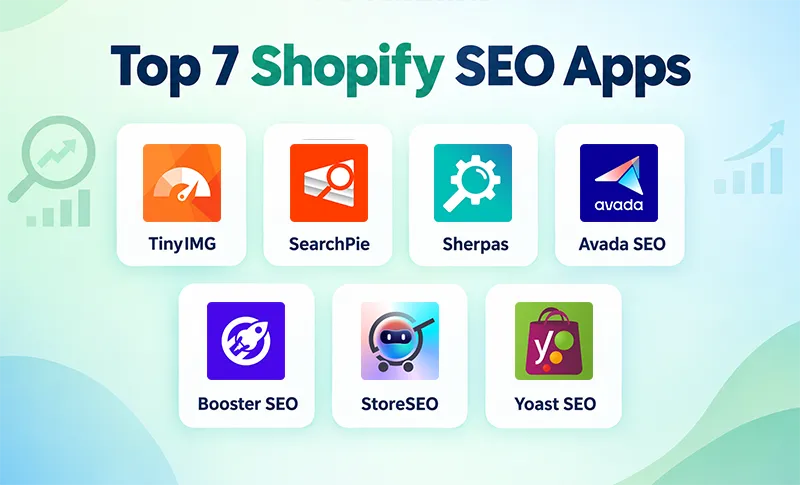
1. TinyIMG (Tiny SEO)
TinyIMG is a strong option for stores that rely on product photography and want to improve image performance alongside core SEO tasks. The app can help compress images and reduce unnecessary file weight. It also supports SEO features such as metadata management and structured data.
For merchants who want Shopify SEO apps that combine image optimization with broader search tasks, TinyIMG offers a useful balance. Its interface is designed for store owners who may not have advanced technical knowledge.
It can be especially helpful for large catalogs where manually optimizing every product image would take considerable time.
2. SearchPie: SEO, Speed & Schema
SearchPie combines several areas of store optimization in one platform. Its feature set covers SEO, site speed, schema, and related technical improvements. This makes it useful for merchants who prefer a central dashboard instead of managing several separate tools.
Among Shopify SEO apps, SearchPie stands out for stores that want to work on both visibility and performance. It can help with metadata, structured data, image optimization, and technical checks.
Store owners should still review automated recommendations before applying them across a large catalog. Human review is important because SEO changes should match the actual content and intent of each page.
3. Sherpas: Smart SEO
Sherpas: Smart SEO is designed to reduce the amount of manual work involved in routine optimization. It can help merchants manage metadata, structured data, image-related tasks, and other common SEO requirements.
This can be useful for stores with many products or collections that need consistent optimization. Shopify SEO apps such as Smart SEO can make repetitive work faster, but automation should support rather than replace an SEO strategy.
Store owners should still research keywords, improve product content, build useful internal links, and monitor search performance. The app is most valuable when it becomes part of a wider process rather than the entire SEO plan.
4. Avada SEO & Image Optimizer
Avada SEO & Image Optimizer combines on-page SEO functions with image and performance optimization. It is suited to merchants who want to address several common issues from one place.
Features can include image compression, metadata support, structured data, and checks for SEO-related problems. For Shopify SEO apps, this type of all-in-one approach can be convenient for small and growing stores. It may reduce the need to switch between multiple dashboards for basic tasks.
However, merchants should check which features are already covered by their theme or other installed tools. Avoiding duplicate functionality can help keep the store cleaner and easier to maintain.
5. Booster SEO & Image Optimizer
Booster SEO & Image Optimizer focuses on improving search-related elements while also addressing image performance. Faster pages can support a better user experience, especially on mobile devices where large product images may slow loading.
The app can assist with common SEO tasks and image optimization, making it a practical option for merchants who want a simpler workflow. When comparing Shopify SEO apps, it is useful to look beyond feature counts.
Consider how easily the tool fits into your existing process. Check automation controls, reporting, support, and the ability to review changes before they affect a large number of pages.
6. StoreSEO
StoreSEO is built around helping Shopify merchants manage on-page and technical SEO tasks from within their store workflow. It can assist with meta information, image optimization, structured data, sitemap-related work, and SEO analysis.
Its broader feature set makes it suitable for merchants who want more control over individual optimization tasks. The tool can be useful for product, collection, and page-level improvements. As with any SEO platform, results depend on the quality of the underlying content and strategy.
StoreSEO can make optimization more efficient, but it cannot replace strong keyword research, useful product information, internal linking, and ongoing performance analysis.
7. Yoast SEO
Yoast SEO is a well-known SEO brand with a focus on helping site owners improve content and search optimization. Its Shopify offering provides tools for areas such as metadata, structured data, and SEO guidance.
It can be a good fit for merchants who prefer a familiar SEO workflow and clear recommendations. SEO apps for Shopify vary in depth and automation, so it is worth comparing features against your specific requirements.
Yoast can support the technical and on-page side of optimization, while merchants should continue to focus on search intent, helpful content, site architecture, and conversion-focused product pages.