
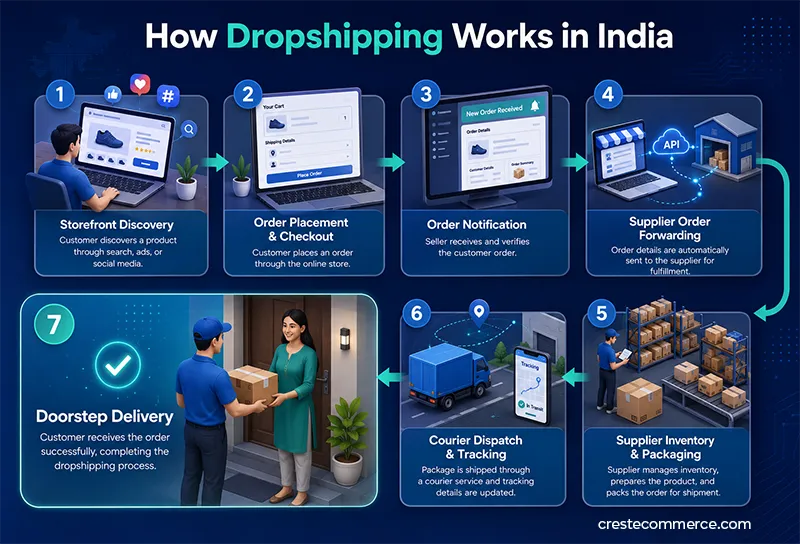
To fully understand how order execution functions within dropshipping in India, you must examine the automated lifecycle that moves an order from a digital click on your website to a physical doorstep delivery. Operating a successful retail storefront requires an intimate understanding of each step in this fulfillment chain to ensure customers receive their purchases without unnecessary delays or miscommunication.
- Storefront Discovery: A prospective buyer browses your independent online store, which is typically built on platforms like Shopify or WooCommerce, and discovers a compelling product through social media advertisements or search engines.
- Order Placement and Checkout: The customer proceeds through your checkout page, enters their delivery address, and selects a payment method, choosing either a digital payment option like UPI or Cash on Delivery.
- Order Notification and Verification: Once the transaction is logged, your store system generates an order notification, prompting you to review the purchase details and verify customer information.
- Supplier Transmission: You forward the order information and shipping destination to your chosen wholesale supplier, a process that can be fully automated using integration plugins.
- Quality Check and Packaging: The supplier retrieves the product from their warehouse, performs a basic quality inspection, and packages the item securely, often utilizing neutral packaging or custom branded invoices.
- Courier Dispatch and Tracking: The package is handed over to a domestic courier aggregator, generating a live tracking link that is automatically transmitted to the customer via SMS or email.
- Doorstep Delivery and Payout: The courier delivers the shipment. For prepaid orders, the transaction concludes smoothly, while Cash on Delivery transactions require the courier partner to collect cash and remit the funds to your business bank account after deducting logistics fees.
Knowing how does dropshipping work at a granular level gives entrepreneurs the confidence needed to troubleshoot any bottlenecks that may arise during peak shopping seasons or regional transport disruptions.
Navigating the Cash on Delivery (COD) Dynamic and RTO (Return to Origin) Challenges
The retail ecosystem features a dominant consumer preference for Cash on Delivery transactions. While digital payment adoption is accelerating rapidly, a substantial share of online shoppers still prefer paying cash upon receipt. This preference acts as a powerful conversion booster, making it easier to convince hesitant buyers to complete purchases. However, it also introduces a severe operational threat known as Return to Origin, or RTO.
Return to Origin occurs when a customer places a Cash on Delivery order, but when the delivery courier attempts drop-off, the buyer refuses the package, provides an incorrect address, or becomes unreachable. Consequently, the courier ships the item back to the supplier, forcing the merchant to absorb both forward and return shipping charges without earning any revenue.
To protect profit margins against RTO losses, successful merchants deploy strict verification measures. These protocols include automated WhatsApp confirmation messages, address validation software plugins at checkout, and charging a nominal prepaid confirmation fee for cash-based transactions. Mastering this financial dynamic is essential for anyone pursuing dropshipping in India today.
Financial Flow: Managing Revenue, Supplier Costs, and Profit Margins
Managing cash flow is the operational heartbeat of a successful retail venture. Because payment gateways and Cash on Delivery courier partners operate on settlement cycles ranging from three to fourteen days, merchants must maintain adequate working capital reserves to fund ongoing marketing campaigns.
Financial planning revolves around calculating your Break-Even Return on Ad Spend. For example, if your retail selling price is fifteen hundred rupees, your supplier product cost is five hundred rupees, and logistics fees total two hundred rupees, your gross margin per item is eight hundred rupees.
Your remaining profit margin must absorb your customer acquisition costs on social media advertising platforms. Regular financial tracking ensures your store remains consistently profitable rather than leaking capital on underperforming ad sets.
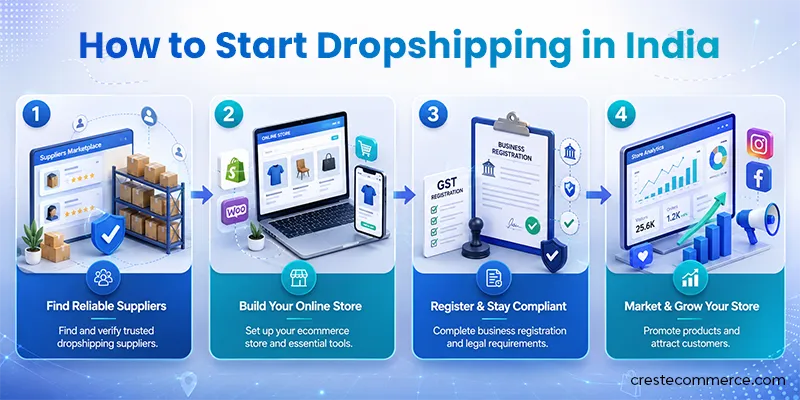
‘Following a reliable guide to start dropshipping business makes it easier to understand the essential steps involved in building a successful ecommerce business. The steps below provide a practical roadmap for launching and growing your online store.
Step 1: Finding and Vetting Reliable Dropshipping Suppliers in India
Sourcing inventory locally is vastly superior to importing from overseas marketplaces because domestic fulfillment drastically compresses delivery timelines from several weeks down to just two to five business days.
Domestic vs. International Sourcing: Weighing Delivery Speeds and Reliability
Deciding between local and international sourcing involves critical operational trade-offs. International suppliers often provide lower base wholesale prices and unique novelty items, but shipping times frequently stretch past fifteen days, causing customer anxiety and elevated cancellation rates.
Conversely, domestic suppliers ensure rapid three-to-five-day delivery windows, straightforward return processing, and elimination of customs clearance hurdles. For most beginners figuring out how to start dropshipping business in India, partnering with local suppliers is the recommended strategy to secure high customer satisfaction and low return rates.
Essential Quality Control Checks and Sample Ordering Strategies
Never list a product on your storefront without verifying its physical quality firsthand. Always order a sample unit to your own address prior to launching paid marketing campaigns.
Evaluate the packaging integrity, verify product functionality, and test the supplier response time during hypothetical customer service inquiries. Conducting these simple checks prevents large-scale customer dissatisfaction down the road when operating a dropshipping business in India at scale.
Step 2: Setting Up Your Online Store and Tech Stack
Building a reliable online store is a crucial step in your ecommerce journey. Indian eCommerce development companies offer solutions designed for better performance, scalability, and higher conversion potential.
Choosing the Right eCommerce Platform
Your digital storefront serves as the central hub of your enterprise. Choosing the correct platform dictates how smoothly your operations scale:
- Shopify: Widely regarded as the industry standard, offering secure cloud hosting, seamless app integrations, lightning-fast checkout flows, and reliable customer support.
- WooCommerce: A flexible, WordPress-based open-source plugin providing absolute code customization and zero monthly subscription software fees, though it demands technical maintenance.
- Marketplace Models: Listing products on established marketplaces provides instant visitor traffic, though independent storefronts offer superior brand ownership and customer data control.
Must-Have Tech Stack and Automation Tools
Equipping your store with modern software automation tools transforms repetitive manual tasks into streamlined digital workflows:
- WhatsApp Business Integrations: Essential for domestic consumer engagement, allowing automated order confirmations, shipping updates, and direct customer support conversations.
- AI Copywriting Assistants: Utilize artificial intelligence software to generate persuasive product descriptions, engaging bullet points, and high-converting marketing copy.
- Inventory Synchronization Plugins: Connect your store catalog directly with supplier databases to ensure real-time stock updates, preventing sales of discontinued items.
Optimizing Your Store for Mobile Users and High-Converting Checkouts
Because over eighty percent of online shopping traffic originates from mobile devices, your website must be meticulously optimized for mobile browsing. Ensure lightning-fast page load speeds by compressing product images, simplify checkout flows with guest options, and display trust badges prominently to eliminate buyer hesitation.
Step 3: Registering Your Business and Ensuring Legal Compliance
Understanding GST Regulations, Invoicing, and Registration Thresholds
Operating a retail business demands strict adherence to domestic tax laws. Under current tax regulations, engaging in inter-state supply of goods mandates GST registration from your very first sale regardless of annual turnover. For intra-state sales within your home state, specific turnover thresholds apply, though interstate eCommerce rules often supersede them. Every completed transaction must include a valid tax invoice detailing applicable tax breakdowns and HSN codes.
Choosing the Right Business Structure
- Sole Proprietorship: Easiest to establish with minimal initial paperwork, low compliance costs, and simplified tax filing procedures, making it ideal for absolute beginners.
- Private Limited Company: Offers robust liability protection, separates personal assets from commercial debts, and builds instant credibility with major payment gateways and wholesale suppliers.
Consumer Protection Laws, Terms of Service, and Avoiding Intellectual Property Infringements
Protect your commercial entity by publishing comprehensive legal documents in your website footer, including transparent Terms of Service, Privacy Policies, and customer refund guidelines. Never utilize copyrighted brand logos, trademarked graphics, or protected character designs without explicit written authorization to prevent immediate platform suspensions and potential legal consequences.
Step 4: Launching High-ROI Marketing Campaigns
Harnessing Social Commerce
Social commerce has become one of the most effective ways to attract customers and drive sales for a dropshipping business. By combining engaging content with targeted advertising, you can reach potential buyers at different stages of their purchasing journey.
- Instagram Reels: Create short, engaging videos that demonstrate your products in real-life situations. Product demonstrations, unboxing videos, and before-and-after comparisons often perform well.
- Facebook Ads: Launch targeted advertising campaigns based on demographics, interests, and shopping behavior to reach potential customers with high purchase intent.
- WhatsApp Broadcast Marketing: Send permission-based promotional messages to existing customers, informing them about new product launches, limited-time offers, and exclusive discounts.
- Retargeting Campaigns: Re-engage visitors who viewed products or abandoned their shopping carts with personalized ads to improve conversion rates.
- Consistent Content Strategy: Post regularly across social media platforms to build brand awareness, increase engagement, and maintain customer interest.
The Power of Micro-Influencers and User-Generated Content (UGC)
Consumers trust authentic peer recommendations far more than polished corporate advertisements. Partnering with niche micro-influencers who command loyal follower bases yields exceptional conversion rates. Provide these creators with complimentary product samples in exchange for unboxing videos and honest reviews, then repurpose that content into your paid ad campaigns to establish instant social proof.
Search Engine Optimization (SEO) and Google Shopping Ads for Organic Traffic
Relying exclusively on paid social ads can strain financial resources during periods of fluctuating advertising costs. Diversify your traffic acquisition channels by publishing informational blog content targeted toward relevant search queries.
Furthermore, configure Google Shopping Ads to capture high-intent consumers actively searching for specific product solutions. Implementing these marketing practices within dropshipping in India helps create a stable baseline of organic and paid traffic.
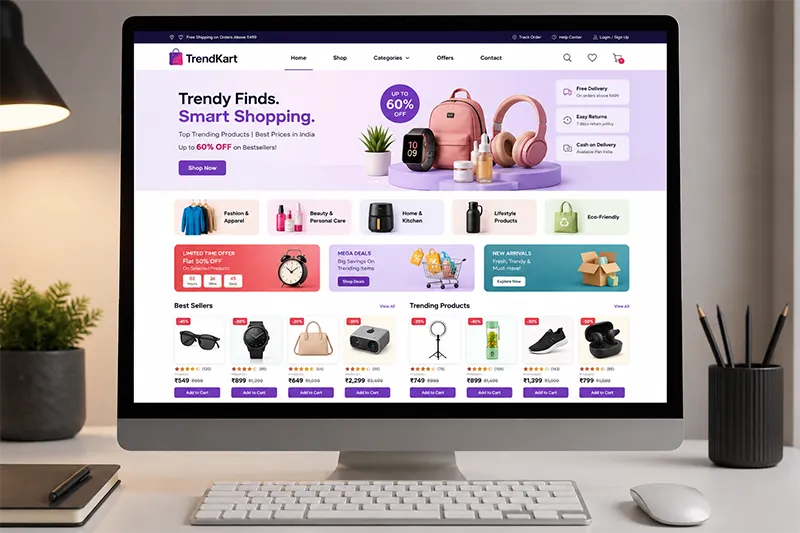
Identifying the best dropshipping products starts with understanding what customers actively search for and purchase consistently.
Top-Performing Product Categories
Selecting the right market segment establishes the foundation for long-term brand viability. Finding winning products for dropshipping requires identifying categories characterized by high consumer demand, strong emotional buying triggers, and striking visual presentation:
- Fashion and Apparel: Trend-driven garments, oversized streetwear t-shirts, ethnic fusion wear, and comfortable daily loungewear consistently dominate social media discovery feeds.
- Beauty and Personal Care: Skincare tools, organic cosmetic accessories, hair styling gadgets, facial massagers, and grooming kits generate high repeat purchase rates, especially when paired with engaging video demonstrations.
- Home and Kitchen Gadgets: Innovative cleaning tools, portable blenders, aesthetic ambient lighting fixtures, smart organizers, and ergonomic workspace accessories solve everyday household challenges for urban consumers.
High-Margin Emerging Niches
To differentiate your storefront from general mass-market competitors, smart entrepreneurs target specialized sub-niches offering higher perceived value and reduced direct competition. Exploring trending products for dropshipping frequently reveals exceptional opportunities within these high-margin categories:
- Lingerie and Comfortable Sleepwear: High consumer demand for modern, size-inclusive sleepwear and intimate apparel supported by discreet packaging and private delivery.
- Plus-Size Fashion: A historically underserved sector in mainstream retail where specialized fashionable clothing commands strong customer loyalty and word-of-mouth growth.
- Eco-Friendly and Sustainable Goods: Bamboo home items, reusable kitchen wraps, biodegradable phone cases, and solar-powered garden accessories appeal directly to environmentally conscious millennial and Gen Z buyers.
Winning Product Criteria: How to Spot Items with High Visual Appeal and Low Sourcing Headaches
When searching for the best dropshipping products in India, experienced merchants evaluate merchandise against strict operational criteria:
- The Scroll-Stop Factor: The item must instantly capture attention on video feeds within the first two seconds, demonstrating an immediate visual transformation or problem-solving capability.
- Favorable Cost-to-Value Ratio: Look for products you can source economically while retailing at a price point that yields a healthy multiplier, ensuring adequate room for advertising expenses.
- Compact Size and Minimal Weight: Lightweight, compact merchandise minimizes volumetric shipping fees and reduces the risk of transit damage compared to fragile or bulky items.
- Strong Utility or Emotional Appeal: Products addressing specific daily frustrations convert casual browsers into buyers rapidly because they fulfill an immediate psychological or physical need. Continuous market research using digital trend discovery tools helps merchants stay ahead of shifting consumer preferences.