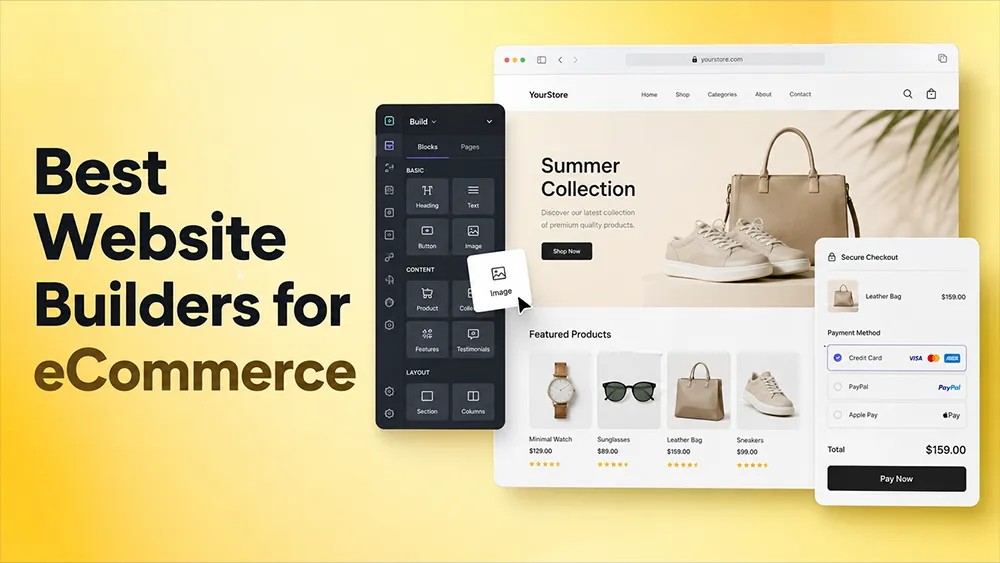
Choosing the best website builder for eCommerce is an important decision for businesses that want to build a successful online store in 2026.
The eCommerce industry continues to grow rapidly as more customers prefer shopping online for convenience, wider product choices, and faster deliveries. Businesses of all sizes are investing in digital storefronts to reach new audiences and increase sales.
An effective eCommerce platform helps simplify store creation, manage products, process payments, and improve customer experiences. With many available options, selecting the right platform depends on your budget, business goals, technical skills, and future growth plans.
What Is an eCommerce Website Builder?
An eCommerce website builder is a platform that allows businesses to create and manage online stores without building every feature from scratch. It provides tools for adding products, managing inventory, accepting payments, and designing storefront pages.
Unlike a standard website builder, an eCommerce website builder includes specialized features required for online selling, such as shopping carts, checkout systems, and order management.
These platforms are useful for startups, small businesses, and established brands that want to launch an online store quickly. Many users prefer do it yourself (DIY) solutions because they reduce technical complexity.
However, professional help from an eCommerce development company can help businesses create more customized, scalable, and conversion-focused websites. When comparing options, businesses often look for the best site builder for eCommerce based on features, flexibility, and long-term requirements.
Benefits of Using an eCommerce Website Builder
Leveraging modern site builders for eCommerce gives business owners a competitive edge by simplifying day-to-day operations and accelerating digital sales growth. Below are the key advantages of building your store on a dedicated platform.
Faster Store Setup
Dedicated platforms eliminate the technical friction traditionally required to build an online store from scratch. Pre-configured database architectures, standard shopping carts, and ready-to-use checkout workflows let merchants launch products in hours rather than months. Quick launching allows brand founders to validate market demand rapidly without burning valuable capital during pre-launch phases.
DIY Store Creation
The do-it-yourself model gives merchants direct control over their online catalog, pricing updates, and promotional banners. Non-technical store owners can edit product pages, upload high-resolution photography, and publish promotional offers through visual site builders. This agility ensures your storefront stays fresh and responsive to changing consumer trends.
Professional Templates
Visual design directly impacts store conversion rates and brand trust. Dedicated platforms offer libraries of professionally designed themes crafted specifically for product display, intuitive navigation, and high-converting checkout flows. Using high-quality layout templates ensures your digital storefront looks polished, credible, and engaging across all screen sizes.
Secure Payment Integrations
Processing online transactions safely requires compliance with strict global security regulations. Modern platforms come pre-integrated with trusted payment providers, native SSL certificates, and Level 1 PCI-DSS compliance frameworks. Having pre-built payment systems safeguards customer payment credentials and reduces cart abandonment caused by distrust during checkout.
Inventory Management
Managing physical stock across multiple sales channels can become overwhelming without centralized software. Dedicated platforms feature integrated inventory tracking that updates stock levels automatically whenever a sale occurs. Real-time updates prevent accidental overselling, simplify stock reordering, and provide clear visibility into your supply chain metrics.
Mobile-Friendly Designs
With mobile commerce accounting for the majority of global web traffic, responsive design is essential. Platforms automatically optimize store layouts, product images, and checkout buttons for smartphones and tablets. Responsive mobile styling guarantees that users enjoy smooth navigation and fast load speeds regardless of their device.
SEO Features
Ranking high on search engine result pages drives consistent organic traffic to your product catalog. Dedicated systems provide built-in fields for customizable meta titles, meta descriptions, image alt text, clean URL structures, and automatic XML sitemaps. Using the best website builder for eCommerce gives your brand the technical framework required to rank effectively for target keywords.
Marketing Tools
Driving traffic requires multi-channel marketing campaigns that re-engage prospective buyers. These platforms include native tools for automated abandoned cart recovery emails, discount code creation, customer segmentation, and direct social media integrations. Integrated marketing software makes it easy to convert initial site visits into repeat sales opportunities.
Scalability
As sales volume increases, your store infrastructure must handle higher traffic volumes without slowing down or crashing. Cloud-hosted platforms automatically scale server bandwidth, database response times, and storage capacities to accommodate seasonal traffic spikes. Choosing the best website builder for eCommerce ensures your platform scales reliably as your order volume multiplies.
Lower Development and Maintenance Costs
Building a completely custom web platform requires significant upfront capital investments for engineering teams, security infrastructure, and ongoing server maintenance. Commercial platforms reduce these initial overhead expenses through predictable monthly subscription models. Saved capital can be redirected toward inventory acquisition, brand marketing, and hiring professional agency experts for specialized customization.
List of the Top 8 Website Builders for eCommerce
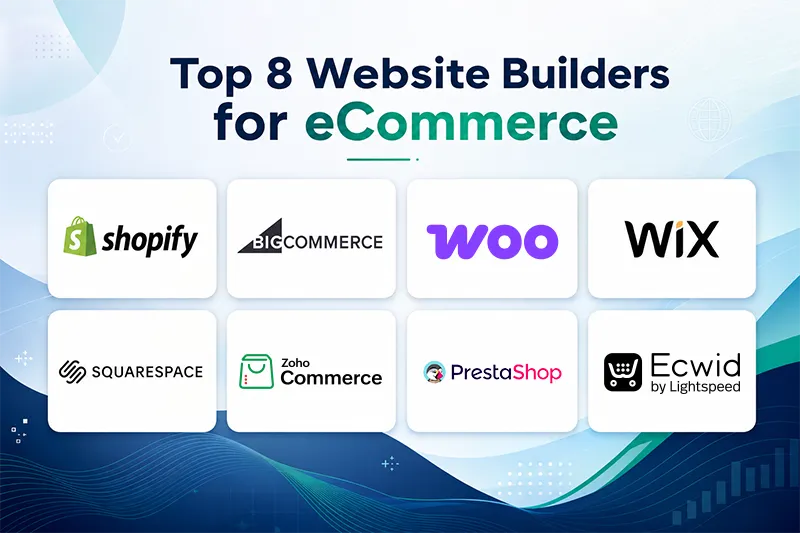
Selecting the best eCommerce website builder depends on your specific product offerings, technical skill set, monthly budget, and long-term expansion goals. Here is a detailed breakdown of the leading platforms available today.
1. Shopify
Shopify remains an industry leader and is widely considered the best website builder for eCommerce for businesses of all sizes. It provides a fully managed, cloud-hosted environment equipped with powerful selling tools, an extensive application marketplace, and an ultra-fast checkout engine. Store owners can sell across physical retail locations, social channels, and online marketplaces through a single unified dashboard.
- Key Features: World-class checkout conversion rates, built-in POS software, 10 inventory location support, multi-currency selling capabilities, and AI assistant tools.
- Pricing: Plans start around $29-$39 per month for Basic, with Advanced and Enterprise Plus tiers for high-volume merchants.
- Pros: Unmatched scalability, massive app ecosystem, highly reliable hosting infrastructure, and extensive payment gateway integrations.
- Cons: Monthly app subscription costs can accumulate quickly, and using external payment gateways incurs additional transaction fees on lower plans.
- Ideal For: Growing brands, drop-shippers, and scaling enterprise businesses seeking a turnkey commercial platform.
2. BigCommerce
BigCommerce is a robust enterprise platform famous for offering more native, out-of-the-box features than almost any competitor. It excels at complex B2B sales structures, multi-storefront deployments, and international selling without requiring dozens of third-party extensions. For businesses that want to avoid heavy app dependencies, BigCommerce stands out as the best website builder for eCommerce in the mid-market space.
- Key Features: Native multi-storefront management, advanced customer segmentation, zero platform transaction fees, complex B2B quoting options, and built-in product filtering.
- Pricing: Standard plan starts at $29 per month billed annually ($39 monthly), with Plus and Pro tiers scaling up as sales volume increases.
- Pros: Broad native feature set, no extra transaction fees across payment gateways, strong built-in SEO architecture.
- Cons: Automatic tier upgrades occur when annual revenue limits are crossed, and theme customization can require specialized technical support.
- Ideal For: Mid-sized merchants, wholesale B2B sellers, and multi-channel retailers requiring built-in functionality.
3. WooCommerce
WooCommerce is an open-source, highly customizable eCommerce plugin built for WordPress. Unlike hosted commercial tools, WooCommerce gives store owners total ownership of their source code, database architecture, and hosting server configurations. When configured by an experienced development team, it serves as the best website builder for eCommerce for brands seeking complete technical freedom and unlimited flexibility.
- Key Features: Full open-source code access, thousands of WordPress themes and plugins, limitless customization capabilities, and self-hosted database control.
- Pricing: The core plugin is free, but hosting, security certificates, premium plugins, and domain registration require separate paid subscriptions.
- Pros: Total freedom over design and data ownership, zero recurring software platform fees, and powerful blogging integrations.
- Cons: Requires technical management, manual updates, dedicated security monitoring, and server performance optimization.
- Ideal For: Businesses with WordPress experience, content-heavy websites, and brands wanting total operational control.
4. Wix
Wix has transformed from a simple drag-and-drop page builder into a capable platform for small business retail. Its visual design studio allows non-technical creators to position elements freely across product pages, landing sections, and promotional popups. Wix is frequently cited as the best website builder for eCommerce for creative entrepreneurs launching curated catalogs.
- Key Features: Intuitive drag-and-drop site canvas, automated sales tax calculation tools, native booking systems, subscription management, and integrated shipping management.
- Pricing: Core eCommerce plan starts at $29 per month billed annually, with Business and Business Elite tiers available for larger operations.
- Pros: Exceptional visual design freedom, beginner-friendly admin panel, no extra platform transaction fees on sales.
- Cons: Site layouts cannot be easily switched after construction, and high-volume order processing can feel sluggish compared to dedicated retail engines.
- Ideal For: Boutique owners, artists, service providers selling products, and small retail catalogs.
5. Squarespace
Squarespace is celebrated for its award-winning, sleek typography and minimalistic design aesthetics. It provides a clean visual environment where lifestyle products, fashion collections, and creative portfolios shine. While it lacks the deep backend architecture of enterprise engines, many visual creators consider it the best website builder for eCommerce when aesthetic appeal is the main priority.
- Key Features: Clean visual templates, integrated social media selling modules, drag-and-drop Fluid Engine layout editor, built-in scheduling, and digital product delivery tools.
- Pricing: Core and Plus plans range from $23 to $39 per month when billed annually, with Advanced tiers reaching $99 per month.
- Pros: Stunning out-of-the-box design templates, built-in marketing features, and smooth content integration.
- Cons: Limited third-party extension directory, restrictive custom logic capabilities, and basic inventory management features.
- Ideal For: Design-focused brands, lifestyle products, artists, photographers, and small boutique stores.
6. Zoho Commerce
Zoho Commerce forms a natural extension of the broader Zoho cloud software ecosystem. It allows merchants to build online storefronts that sync seamlessly with Zoho CRM, Zoho Inventory, Zoho Books, and Zoho Desk. This platform provides an integrated business environment for companies looking to streamline administrative tasks without stitching together multiple disconnected apps.
- Key Features: Deep native integration with the Zoho software suite, automated stock management, multi-currency support, visual page building, and dynamic customer segment tracking.
- Pricing: Entry plans start at affordable monthly subscription tiers, making it accessible for budget-conscious small businesses.
- Pros: Exceptional operational integration, streamlined inventory management, and low overall technology stack costs.
- Cons: Smaller template catalog, fewer third-party integrations outside the Zoho environment, and smaller community forums.
- Ideal For: Existing Zoho software users, B2B wholesale suppliers, and operational-focused small businesses.
7. PrestaShop
PrestaShop is a robust open-source platform popular across European and international markets. It offers both a self-hosted open-source platform and a managed hosted environment, giving store owners flexibility in deployment choices. PrestaShop is a top contender for international retailers who require granular control over localized storefronts, languages, and tax laws.
- Key Features: Advanced multi-language capabilities, multi-currency support out of the box, customizable catalog management, and an extensive module marketplace.
- Pricing: Free download for the self-hosted framework, with costs associated with hosting infrastructure, premium themes, and commercial add-on modules.
- Pros: Highly flexible international selling options, strong community developer ecosystem, and complete source code access.
- Cons: Module add-ons can become expensive, platform upgrades require technical expertise, and basic themes need custom design work.
- Ideal For: Multi-lingual international merchants, technical store owners, and businesses with custom regional requirements.
8. Ecwid by Lightspeed
Ecwid by Lightspeed takes a unique architectural approach by letting merchants add online shopping capabilities to any existing website, blog, or social media page. Rather than forcing you to rebuild your site from scratch, Ecwid embeds a fully functional shopping cart into existing sites created on WordPress, Wix, Squarespace, or custom HTML.
- Key Features: Embeddable shopping widget architecture, centralized inventory syncing across external sites, point-of-sale integration, and social sales channel connectors.
- Pricing: Free tier available for small product counts, with paid plans starting at accessible monthly rates for expanding catalogs.
- Pros: Allows merchants to retain existing websites, effortless multi-platform distribution, and fast setup times.
- Cons: Customization options are limited by the widget framework, and advanced SEO controls are weaker than dedicated standalone platforms.
- Ideal For: Merchants with established non-eCommerce websites who want to introduce online ordering without starting over.
How to Choose the Best Site Builder for eCommerce
Selecting the right software foundation requires a clear understanding of your current operational bottlenecks, technical expertise, and growth strategy. Here are ten strategic criteria to guide your evaluation process.
Define Your Budget
Your total cost of ownership extends far beyond the advertised monthly platform fee. You must account for payment processing transaction fees, premium theme purchases, monthly third-party app subscriptions, custom domain renewals, and potential developer costs. Calculating these operational expenses upfront prevents unexpected budget overruns as sales volume increases.
Consider Ease of Use
Non-technical store operators need intuitive administrative dashboards that simplify product listing uploads, order fulfillment, and basic site updating. Selecting a platform with a user-friendly interface reduces employee onboarding time and limits accidental site errors. Balancing simplicity with feature depth ensures your team can manage day-to-day operations efficiently without constant developer intervention. Choosing the best website builder for eCommerce keeps your internal team agile and focused on growth.
Look for Essential eCommerce Features
Ensure any platform under consideration includes core functionality such as automated tax calculations, real-time shipping rate estimators, discount engine capabilities, inventory alerts, and secure guest checkout flows. Missing core selling features forces reliance on third-party apps, which increases site complexity, monthly overhead costs, and potential point-of-failure risks.
Check SEO Capabilities
Search engine visibility directly impacts organic traffic acquisition and customer acquisition costs. Evaluate whether the platform permits full customization of URL structures, meta titles, meta descriptions, canonical tags, and structured product schema data. High-ranking sites rely on fast page loading times, clean code generation, and automated XML sitemaps provided by top-tier platforms.
Evaluate Payment Gateways
Different customer demographics favor specific payment channels, such as credit cards, digital wallets, buy-now-pay-later services, or local bank transfers. Ensure your chosen software supports the payment processors favored by your target audience in your primary sales regions. Furthermore, pay close attention to platform transaction fees that may be imposed when using third-party payment gateways.
Assess Customization Options
Your visual identity differentiates your business in a crowded online marketplace. Investigate theme editor flexibility, liquid or CSS customization access, page layout tools, and template variety. Flexible customization lets you tailor user journeys, build branded landing pages, and optimize checkout funnels for maximum visitor conversion.
Consider Scalability
A platform that meets your needs today must also support your growth trajectory tomorrow. Look closely at server uptime history, database handling during flash sales, bandwidth limits, and multi-location inventory support. Choosing the best website builder for eCommerce guarantees your digital storefront remains stable, fast, and secure as daily traffic and order volume grow.
Review Customer Support
When unexpected technical glitches, payment outages, or order sync issues happen, responsive customer support is critical. Look for platforms that offer 24/7 live chat support, phone assistance, dedicated account managers, and extensive technical documentation. Reliable customer service reduces downtime risks and minimizes revenue loss during critical selling windows.
Check Available Integrations
Modern commercial operations rely on an interconnected web of software tools, including email marketing engines, accounting programs, inventory management, and customer relationship management systems. Verify that the software features native integrations or flexible API connectors for your existing tech stack. Selecting the best website builder for eCommerce ensures seamless data synchronization across your business tools.
Read User Reviews
Independent merchant reviews provide transparent insights into real-world platform reliability, hidden costs, and operational pain points. Analyze feedback on platform community forums, independent software review platforms, and developer groups. Real merchant experiences illuminate how platforms perform under heavy daily usage and reveal long-term vendor support quality.
Final Thoughts on the Best Website Builders for eCommerce
Choosing the right platform is essential for building a successful online store. Shopify is a strong option for businesses that need simplicity and scalability, while BigCommerce works well for companies requiring advanced features.
WooCommerce and PrestaShop provide greater customization, whereas Wix, Squarespace, Zoho Commerce, and Ecwid are suitable for businesses looking for easier management.
The best website builder for eCommerce depends on your business goals, budget, technical requirements, and future growth plans. Before making a decision, evaluate features, payment options, SEO capabilities, integrations, and scalability.
Selecting the right platform will help create a strong foundation for your online business and support long-term success.
Need Help from an eCommerce Web Development Company?
Every platform listed above offers fantastic tools, but creating a store that truly reflects your brand takes time and effort. Crest eCommerce is a trusted eCommerce web development company that helps you get the most out of whichever platform you pick.
We handle custom layouts, store setup, and visual touches so you can focus on your products while we build a seamless shopping experience for your buyers. Get in touch with us today to see how we can turn your chosen builder into a thriving online store.